With Iraq going through difficutl fight for its bare survival, betting on its currency seems crazy. In the investment and
trading circles, the vast majority of people are interested on trading only
major currencies such as the Japanese yen or Swish franc. In fact, they tend to be so fiercely
concentrated on those few options that the plethora of opportunities present in
the lesser known and followed currencies escape their notice. Still, it is precisely these options that
might just offer a far superior earning potential. The Iraqi dinar falls into
that group. With its acquired stability
and increasing liquidity, it mighty just be one of the biggest positive
surprises of them all.
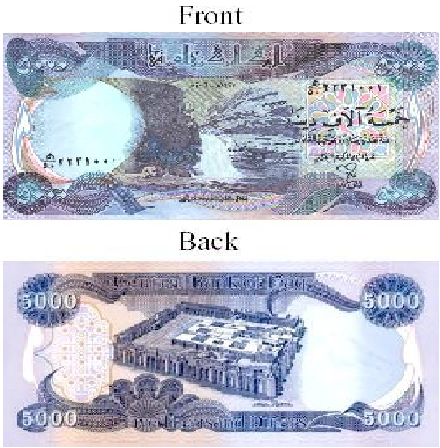 As of today, the
exchange rate between Iraqi Dinars and US Dollar is 1160 to 1. This rate has experienced little change from
a year ago when it moved around the 1150 level.
Why is this important? Well, it
is widely known that country problems and turmoil show swiftly in its exchange rate. Thus, such a small price movement for the
Iraqi Dinar reflects the growing political and economical strength of
Iraq.
This analysis is also
confirmed by looking at the past five year history, were the price experienced
a tight trading range between 1130 (set in) and 1170 (reached in). Data that shows that the exchange rate of the
mid 90’s when it stood at 3,000 dinars is long gone.
A number of positive
factors exist to support such a stable currency. The revenue that comes through the sale of Iraqi
oil been the predominant one. The
country currently oil production stands at around 3.5 million barrels per day
(bdp) of which close to 2.8 million bdp can be exported. With the price for oil at around $100, this
export translates to more than $100 billion in yearly revenue.
Equally important to
consider is the growing presence of foreign direct investments. The
International Trade Centre (ITC) – a joint venture of the United Nations and
the World Trade Organization – estimated that Iraq attracted over $1.6 billion
of foreign direct investment (FDI) inflows in 2011. That is more than double the rate of $383
billion during 2006.
The biggest boom is
located in the real estate market. In
2011, the GOI began negotiations with foreign companies for its largest housing
project yet, a 100,000-unit complex located in Besmayah. The $8 billion
contract was won by the Korean firm Hanwha, project that is expected to take
several years to complete. Other major building contracts signed in 2012
include a $45 million contract with UAE’s Construction Tech to rebuild the CBI,
$185 million to Kar Construction & Engineering to build 2,000 homes north
of Baghdad, $55 million to a Turkish firm to build 1,200 homes in Kirkuk, $247
million to an Italian firm to build 2,000 homes in Diwaniya, and a $98 million
contract with RW Middle East to develop 1,300 housing units in Samawah. The
British firm Harlow International has started to officially open the Harlow
Riverside business park since 2013, project that houses residences, offices,
restaurants, and amenities. In Thi Qar province, the U.S. firm, Markez Inc. won
a contract to build 1,000 housing units in Nasiriyah.
The inflation rate is
also worth considering. Iraq’s Central
Bank has managed during the past five years to reduce inflation rates from 34%
to 3 or 4%.
For the short term
market analysis, we can take a look at some of the most popular technical indicators
including Moving Averages (MA). MA is
one of the most popular indicators as it can clearly show the current market
trends. At present, a 200 day MA has
been showing a down trend which indicates the appreciation of the Iraqi Dinar.
Another important tool
is the price volatility. The volatility study of the historical price moves is
a good way to identify the level of risk associated with the underlying
asset. In other words, big price swings
create high volatility which translates to an increased level of risk. By that
measure, the Iraqi Dinar is extremely safe, even safer than most of the other hard
currencies. However, has this stability been
created artificially? Has it been
created by the government enforcing a strict currency convertibility, like the
one Argentina used during the 90s that ultimately led them to a financial
meltdown and sever recession in 1997?
No, this is not the
case with Iraq. Here the central bank operates quite differently. The hard currency is sold to
banks, companies and traders in exchange for evidence of import and transaction
receipts. The auctions aim to prevent market speculation and stabilize the
exchange rate of Iraqi dinars to the US dollar.
Reducing the number of buyers at the auctions means reducing
the amount of USD in circulation, strengthening the USD relative to the Iraqi
dinar, and weakening the dinar back to the desired target level.
Basically, what all
these factors truly reveal is the strict government dedication to have a stable
and valuable currency whose rate is progressively determined more by market
forces than by government rate fixation.
So if the future looks so bright for Iraqi dinar, how high can it
go? Historically, it once stood at 3 USD
to 1 IQD. Can it reach those levels
again? Nobody knows. The Iraqi Central Bank with its intervention
will most like curb any drastic price moves in order to maintain economical
stability for the time being. So, what does this mean for investors? An
investment of 1,000 USD will currently yield 1,160,000 IQD, however, if the
currency were to reach those high levels again
the account could reach a worth of 3,4800,000 IQD. An astronomical
return of over 2000 %!! Let’s be clear
thought, nobody is saying that the Iraq dinar will ever reach those levels
again. Still, Iraq oil production is
going to steadily increase. Furthermore,
the country is now one of the firmest democracies in the region, and eventually
its central bank will have to let the Iraqi dinar flow with adequate
freedom. These points will ultimately
happen, and when they do they will lead to a very significant revaluation.
In conclusion, with
the acquired price stability, the risk of investment in the currency is
low. And to a well informed and intelligent
investor, the currency has potential to offer far superior return than any overtraded
currency can. A smart investor always
looks for ways to properly diversify his/her portfolio and to always be fully
protected against the unforeseeable.
Investing in Iraqi Dinar offers exactly that.
But with all the current problems in the country, it would be the smartest thing to just wait and hold before jumping onboard.
For most current updates, check the site http://postsreviews.blogspot.com/
But with all the current problems in the country, it would be the smartest thing to just wait and hold before jumping onboard.
For most current updates, check the site http://postsreviews.blogspot.com/
Any investor that is considering any type of investment should not forget to be always fully diversified and fully protected against the unforeseeable.
More info about Iraqi Dinar
More info about Iraqi Dinar
Before jumping into Forex market, please consider visiting our web page about possible risks associated with trading Forex:


